Emma thought a vision board meant flipping through magazines until something “sparked joy.” By 4 p.m., she had a stack of pretty pictures and zero idea what any of it had to do with her actual life. That was the moment she realized: a 2026 vision board needed to be less about vibes and more about her real priorities.
If you’ve ever stared at a blank board (or an empty canvas on your laptop) wondering where to start, you’re in good company. Vision boards are everywhere now - from journaling apps to online whiteboards and AI tools - but the ones that actually work have a few things in common.
From “Aesthetic Collage” to Clear Intentions
Emma started by asking herself one simple question: “What would a good year actually look like for me?” Not in Pinterest quotes, but in real Tuesday-afternoon details.
She opened a fresh LunaBoard and created four sections: Work, Relationships, Home, and Self. Instead of hunting for the “perfect” images right away, she typed quick text blocks at the top of each area:
- “Less Sunday-night dread”
- “More dinners with people who get me”
- “Apartment that doesn’t stress me out”
- “Body I feel at home in”
They weren’t fancy. But they were honest.
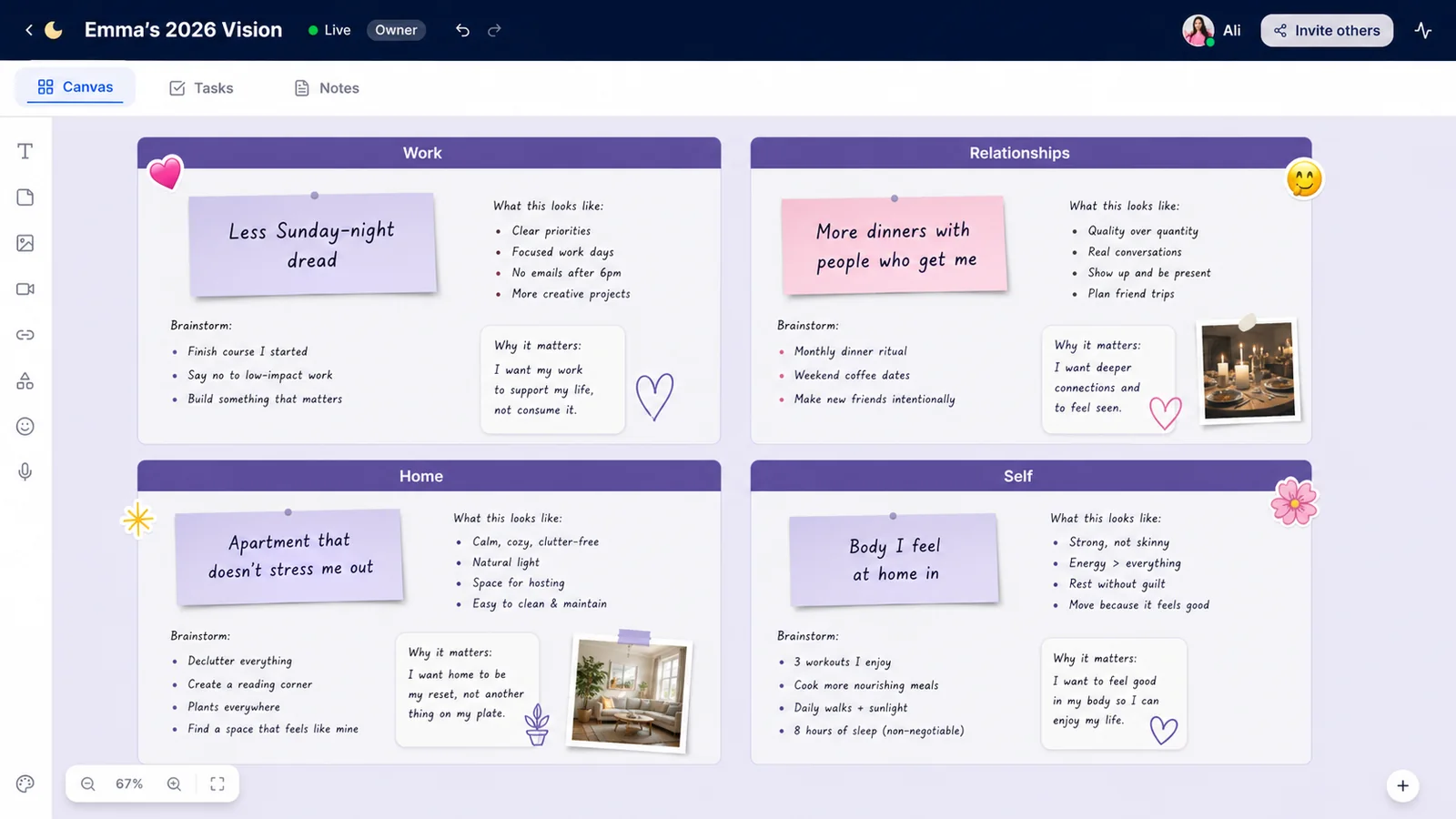
Only after that did she start adding visuals. Suddenly, the right images were easier to spot: a woman closing her laptop at 5 p.m., a cozy dinner table, a bright living room with plants, someone stretching in soft workout clothes. Each photo earned its spot because it connected back to those words.
Building a Board That Fits Your Actual Life
In 2026, your vision board doesn’t have to live on your wall. It can live on your phone, your laptop, or all three. The key is choosing a format you’ll actually see and touch often.
Paper, digital, or both?
Emma loved the idea of a physical board… until she realized she moved furniture every three months and didn’t have a good wall for it. A digital board on LunaBoard meant:
- She could drag in screenshots from Zillow, Pinterest, and her camera roll.
- She could rearrange things as her priorities shifted.
- She could open it from her phone on the train instead of waiting to be home.
So she created one big “2026 Vision” board, then duplicated smaller boards for specific themes: “Career Reset,” “New Apartment,” and “Joyful Weekends.”
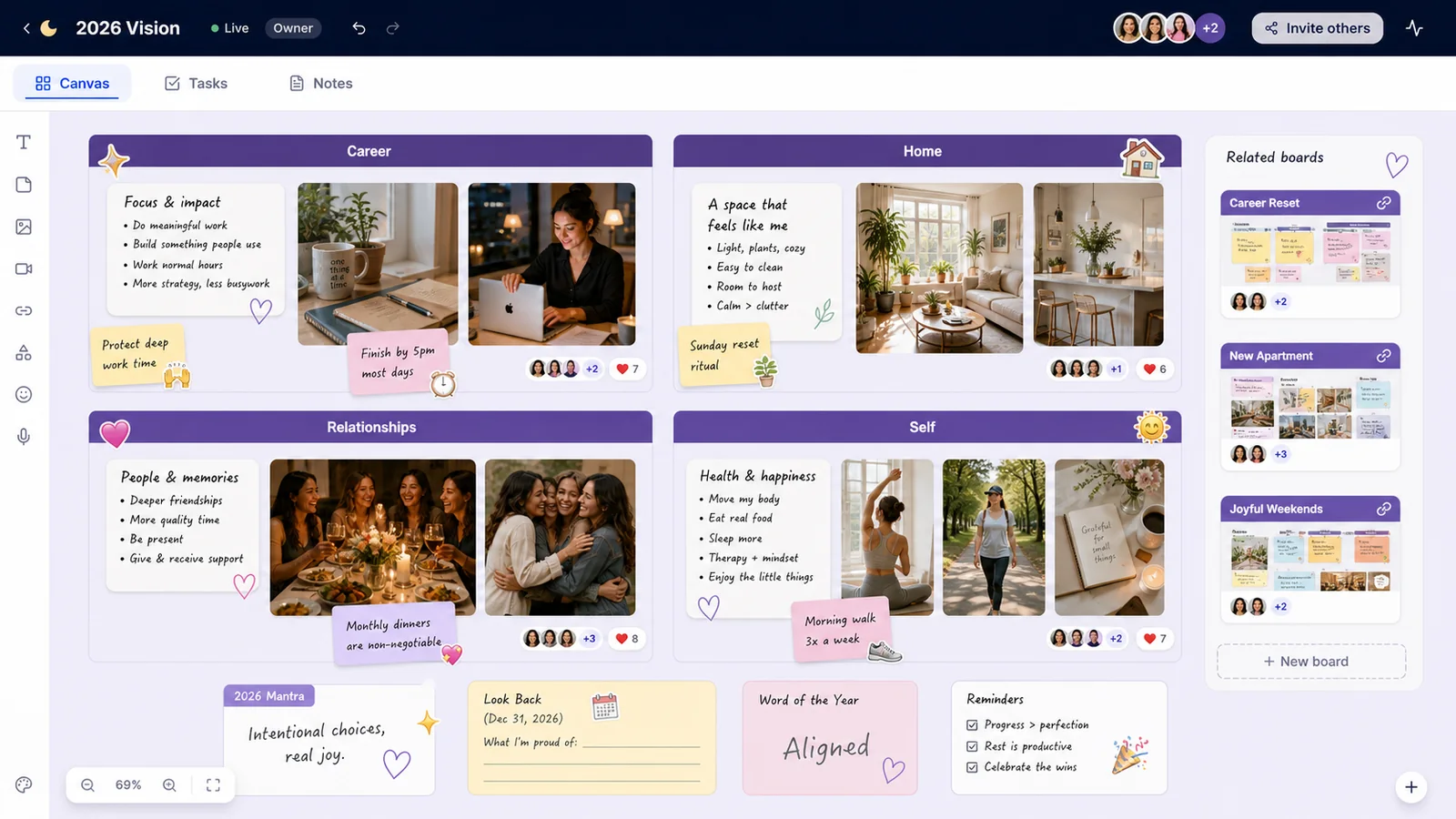
If you’re more tactile, you can still print your digital board or screenshot it as your lock screen. The format isn’t what makes it powerful; it’s the clarity behind it.
The 2026 Vision Board Blueprint (Without Killing the Magic)
Instead of a stiff checklist, think of these as chapters in your story.
1. Get specific about the feeling first
Before Emma added a single photo, she wrote how she wanted her year to feel:
- “Unrushed mornings”
- “Work that feels challenging but not exhausting”
- “Friends I don’t have to perform for”
- “A body that lets me say yes to hikes, not just couches”
Those phrases became anchors. Any image that didn’t support them? Out.
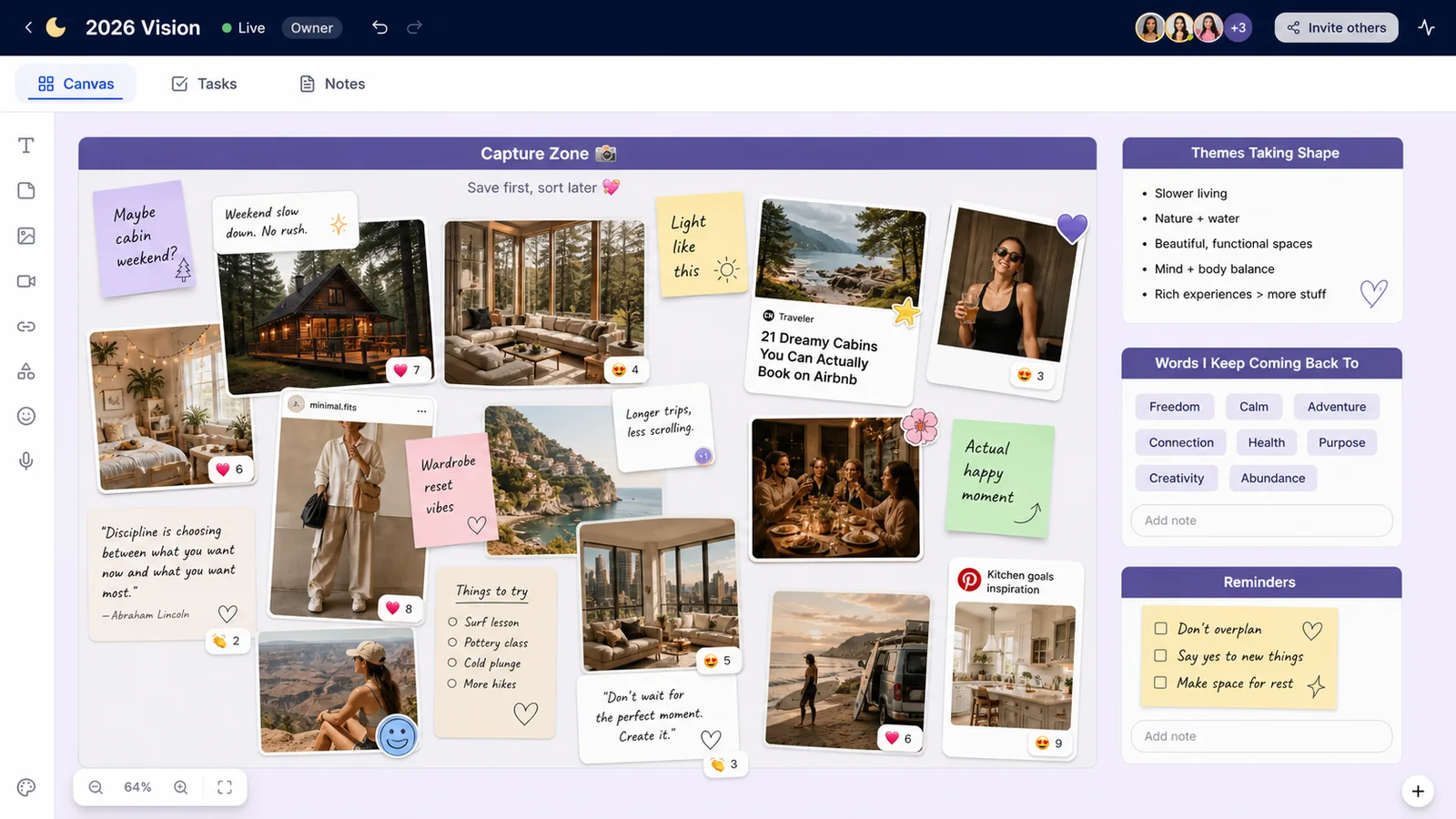
2. Collect visuals in “capture mode”
For one week, Emma didn’t overthink. She:
- Screenshot Airbnb listings of dreamy cabins and city apartments
- Saved Instagram posts of outfits she’d actually wear
- Dragged in photos from her own camera roll where she looked genuinely happy
She dumped everything into one messy area of her LunaBoard. Only later did she sort.
3. Curate with a gentle “why”
When it was time to organize, she asked “why” out loud:
- “Why this apartment photo?” → Because of the light, not the expensive couch.
- “Why this travel picture?” → Because she missed feeling adventurous, not because everyone goes to Italy.
Anything she couldn’t explain in a sentence, she deleted. What stayed felt lighter - but more powerful.
Keeping Your Vision Board Alive All Year
The prettiest board in January doesn’t matter if you never look at it after March. Vision boards work best when they become part of your week, not a one-time craft project.
Emma set a recurring reminder: Sunday evenings, 15 minutes with her 2026 board.
Some weeks she simply scrolled through and noticed what still felt true. Other weeks, she:
- Added sticky notes with “This is happening” on wins (like a successful presentation)
- Moved images closer to the center as priorities rose
- Hid or shrank things that no longer fit
When she finally got the new role she’d been eyeing, she recorded a 20-second voice note onto her “Career Reset” section: “You did this. Remember how impossible it felt in January?”
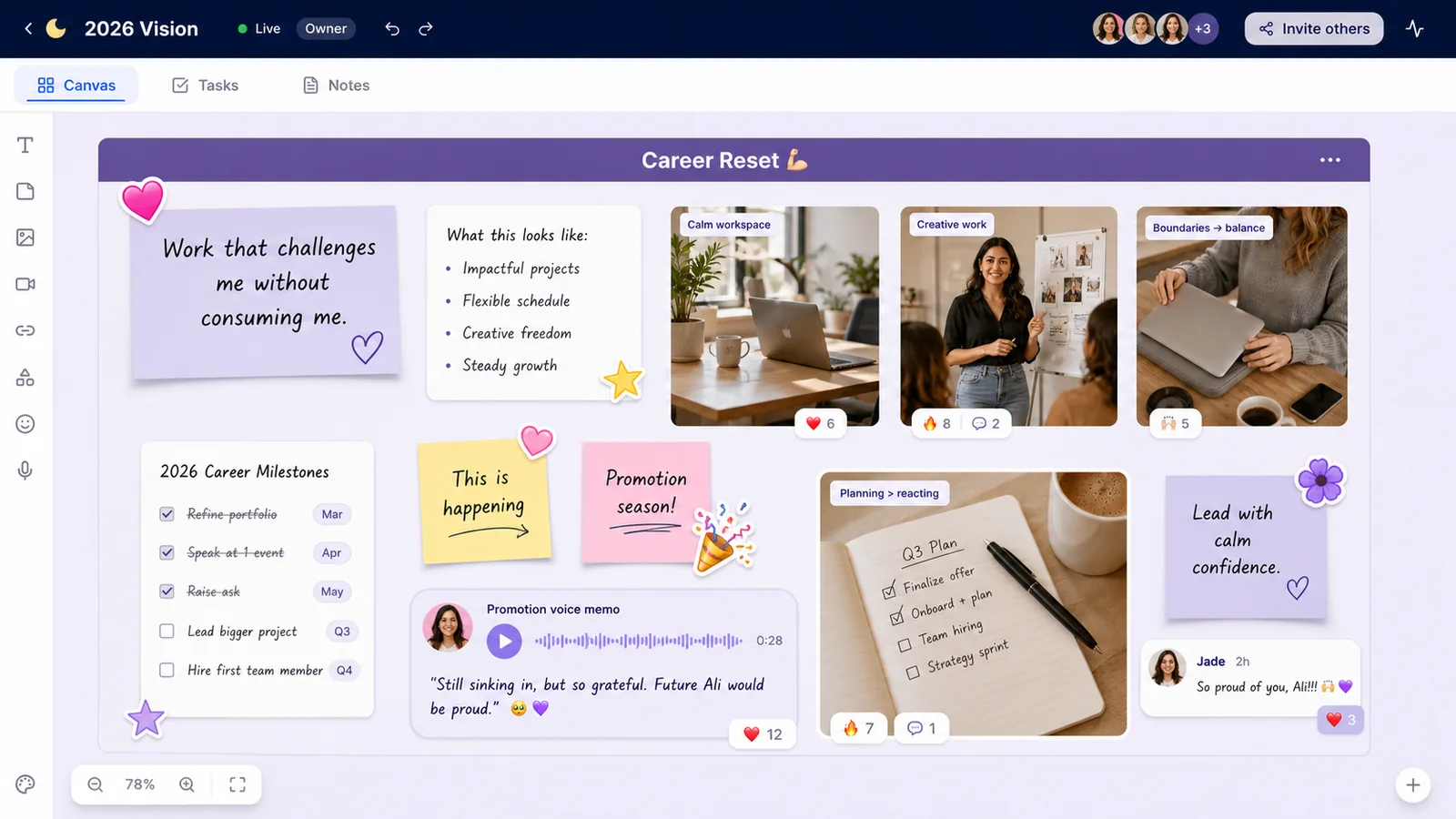
On rough workdays, she’d tap that note and hear her own excited voice. It wasn’t magic. It was proof.
Frequently Asked Questions
What is a vision board in 2026, really?
A vision board is a visual collection of images, words, and symbols that represent what you want your life to look and feel like over a specific period. In 2026, that might be a physical poster on your wall, a digital board in an app like LunaBoard, or both - what matters is that it reflects your real priorities, not just what looks good online.
How do I start a vision board if I have no idea what I want?
Begin with feelings, not goals. Ask, “How do I want my days to feel?” and write simple phrases - calm, connected, creative, energized. Then collect images and quotes that match those words. Like Emma, you can refine and get more specific as you go, instead of waiting to be perfectly clear upfront.
Do I need to be “artistic” to make a good vision board?
Not at all. Your board is not a design portfolio; it’s a tool. Messy boards with honest images work better than perfectly curated ones that don’t mean anything to you. Digital tools help here, because you can rearrange and experiment without wasting materials.
How often should I update my vision board?
Check in at least once a month, and more often if you enjoy it. You don’t need to rebuild from scratch - just move things around, add a few images, or leave a note about what’s changed. The point is to keep it relevant, not permanent.
What if my goals change during the year?
That’s normal - and healthy. A 2026 vision board is a living document. You can shrink, hide, or remove images that no longer fit, and add new ones as your life and priorities shift. Changing your board doesn’t mean you failed; it means you’re paying attention.
Conclusion & Gentle Next Step
Emma’s board didn’t magically hand her a new job, a dream apartment, and perfect weekends. But it did something quieter and more important: it reminded her, week after week, of what she said mattered.
If you’re ready to give your year a clear, visual story, start a simple 2026 board on LunaBoard - no perfection, no pressure. Just a canvas big enough to hold who you are now and who you’re becoming.