Sam prided himself on being “not that guy.” He didn’t manifest; he made spreadsheets. So when HR announced a “Vision Board & Goal Setting” afternoon, he opened Slack to complain before the email even finished loading.
But then the facilitator said something that stopped his eye roll mid-spin: “We’re not here to manifest lottery wins. We’re here to help your brain notice what you’ve already said matters.”
Sam stayed. Reluctantly. And over two hours, he realized a vision board could be a practical tool - as long as it was grounded in how the brain actually works, not in cosmic promises.
What a Vision Board Really Does in Your Brain
You know that thing where you learn a new word and suddenly hear it everywhere? Or you start thinking about buying a certain car and then see it at every intersection?
That’s your reticular activating system (RAS) at work - the part of your brain that filters what you notice. A vision board is basically a curated, visual way of telling your RAS, “Hey, this stuff is important. Please flag it.”
Instead of thirteen conflicting goals scribbled in a notebook, Sam’s board showed:
- One or two clear career directions
- A specific kind of work-life balance (not just “more balance”)
- A rough picture of what success could look like outside of job titles
Was it magic? No. But it made his priorities visible enough that his brain could start connecting dots.
Step 1: Turn Vague Goals Into Concrete Cues
Sam’s original “goals” were things like:
- “Be more successful”
- “Get healthier”
- “Travel more”
None of that is helpful to the brain. So on his digital board, the facilitator had him translate each into something his RAS could actually scan for:
- “Lead one major project in my team this year”
- “Walk 8,000+ steps three days a week”
- “Save enough for one international trip by December”
Then he found or created visuals that matched those specifics:
- A screenshot of a Gantt chart with his name at the top
- A simple line graph labeled “Steps per day”
- A photo of the specific city he wanted to visit, not just “some beach”
Now, every time he saw the board, his brain got a reminder: “Look for chances to lead. Notice walks. Notice flight deals.”
Step 2: Use Environmental Triggers, Not Just Pretty Pictures
The facilitator explained that visualization works best when it’s tied to context, not just outcomes. So Sam added cues from his real life:
- A photo of his actual commute route, with a tiny walking icon on the last three blocks.
- A screenshot of his project management tool, with a fake card labeled “Sam - Lead.”
- An image of his banking app, with a savings goal typed in on a sticky note: “Trip fund: $1,200.”
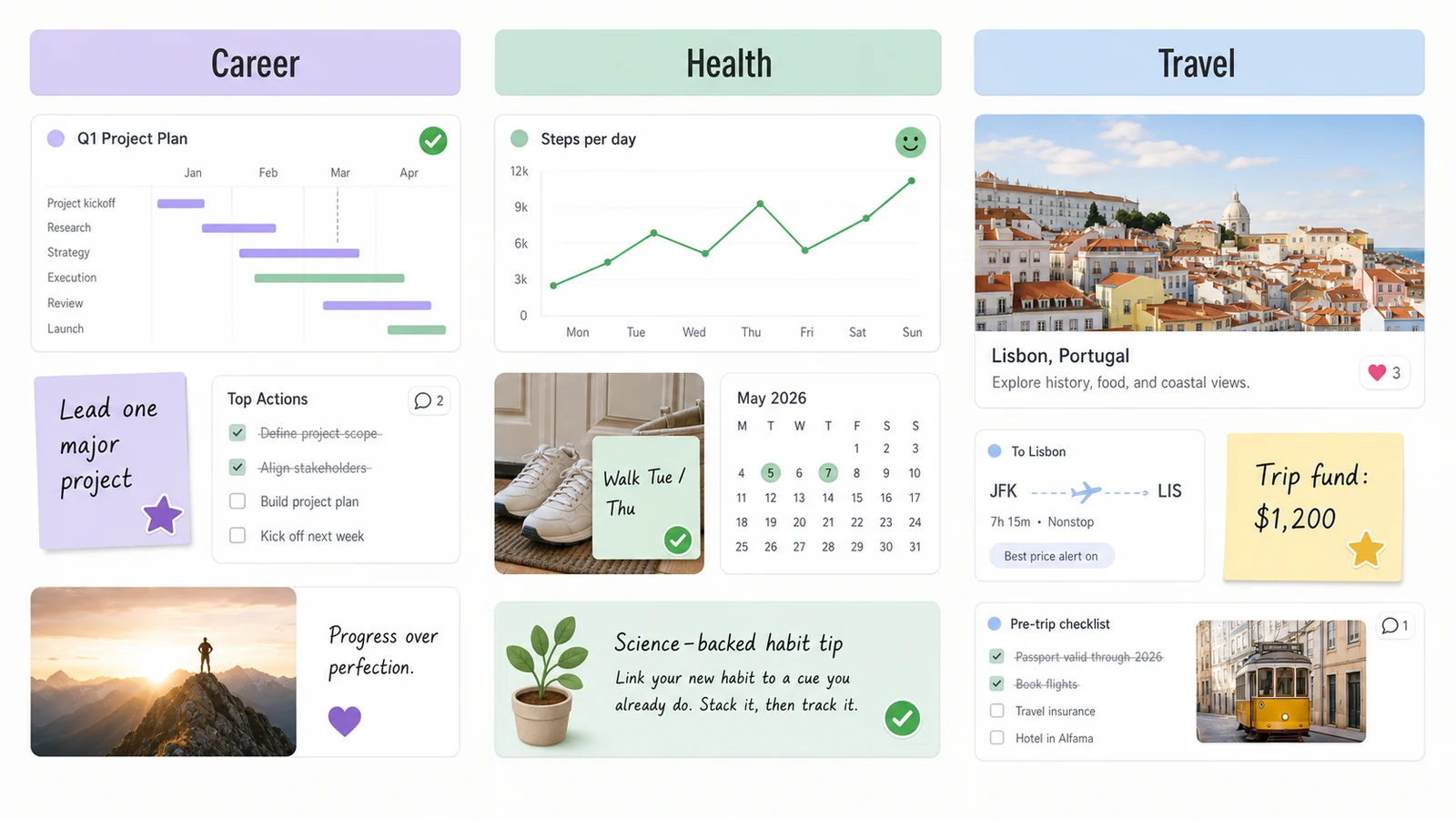
These weren’t aspirational Pinterest images. They were visual nudges tied to his real routines. His brain knew where to plug them in.
Step 3: Pair Images With Tiny, Obvious Next Steps
Here’s where most vision boards lose the skeptics: they stop at the collage. The facilitator had Sam add a second layer - micro-actions.
Next to each cluster, he added one tiny text block:
- “Ask my manager which upcoming projects need a lead.”
- “Put walking shoes next to the door after work.”
- “Open flight alerts for Lisbon.”
When those actions were done, he didn’t delete them. He added a checkmark sticker. Over time, that “done” cluster started feeling as satisfying as crossing off a to-do list.
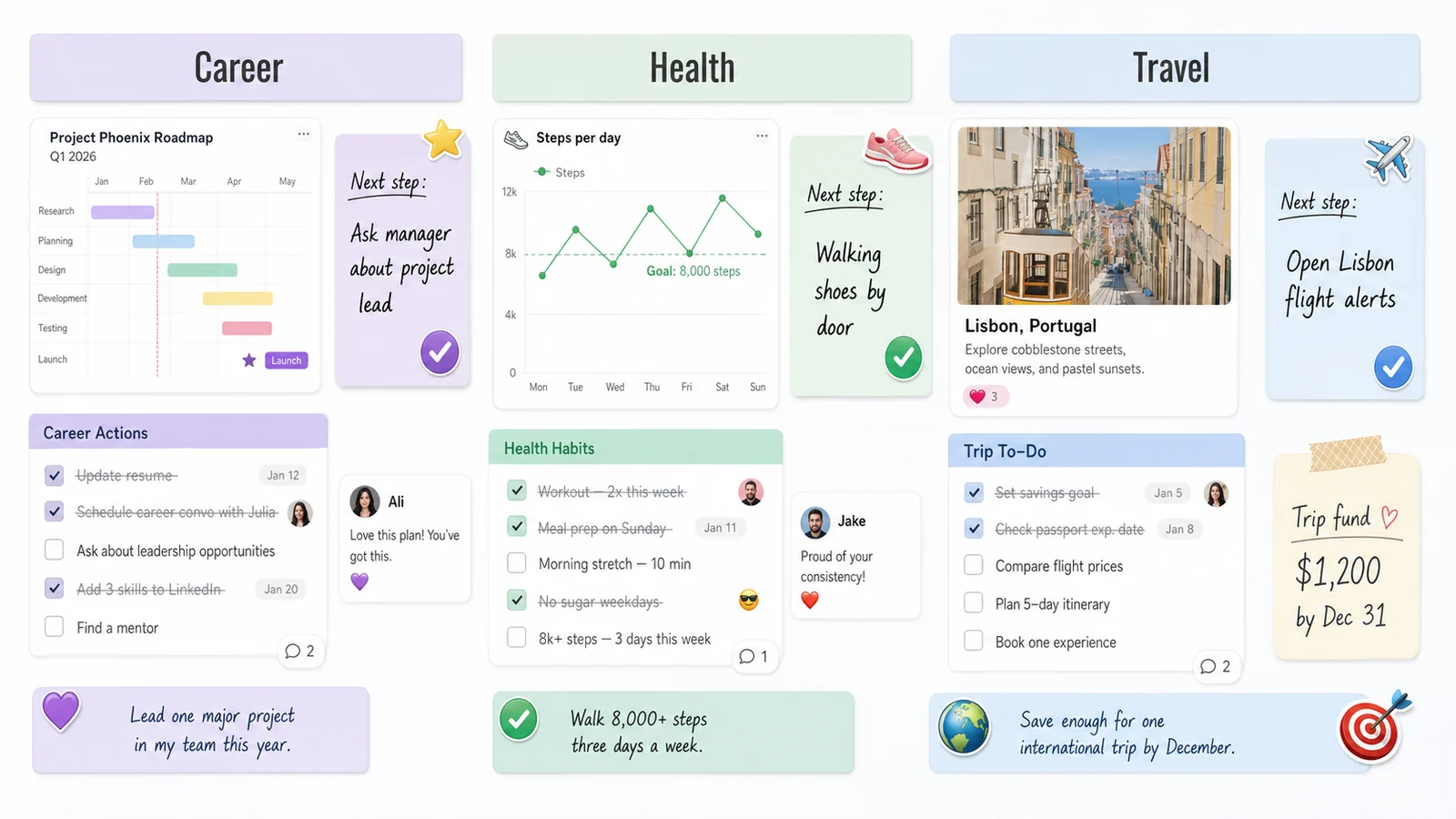
To a skeptical brain, that’s a lot more credible than “the universe will deliver.”
Step 4: Review Like a Scientist, Not a Judge
Once a month, Sam opened his board and asked three questions:
- “What did I actually do this month that relates to anything on here?”
- “What patterns am I noticing?”
- “Is there anything on this board that makes me feel weirdly tense or obligated?”
Sometimes the data surprised him. He realized he loved mentoring junior teammates more than he loved fancy project names. He saw that his “dream trip” photo didn’t excite him as much as a picture of a simple cabin upstate.
So he adjusted the board - not as a failure, but like updating a hypothesis. New data, new model.
Frequently Asked Questions
Do vision boards scientifically “make” things happen?
A vision board doesn’t control reality, but it does influence attention and behavior. By repeatedly exposing your brain to specific goals and contexts, you train your RAS to notice relevant opportunities more easily, which can change your decisions over time.
Isn’t this just confirmation bias?
A little, yes - and that’s not always a bad thing. The key is to combine your board with honest check-ins: Are you actually taking actions that align with the images you’ve chosen? If the board makes you ignore important data (“this job is burning me out”), it’s time to revise it.
What if I feel silly making one?
You’re allowed to feel silly. Start with a private, minimal board. Use screenshots, charts, and simple icons instead of magazine cutouts if that feels more grounded. You don’t have to tell anyone you’re doing it.
Can I use a vision board at work without it feeling fluffy?
Yes. Focus on concrete outcomes: skills to build, types of projects, boundaries around time. Use the board in LunaBoard as a visual planning space - where images sit right next to roadmaps, links, and notes - instead of a decorative poster.
Conclusion & Gentle Next Step
Sam still jokes about that first workshop. But when he scrolls his board now, he doesn’t see “manifestation.” He sees a visual snapshot of what his brain is currently tracking - and proof that a year of small, aligned actions adds up.
If your skeptical side has been side-eyeing vision boards, try one that respects your brain. Open a board in LunaBoard, keep it simple, and let it be a living experiment, not a cosmic contract.